
Coach Heritage: Bonnie Cashin, Glovetanned Leather and the Creed Patch
In many retellings, Coach’s story is presented in a tidy shape that the records do not fully support. Proceeding chronologically from a small Manhattan workshop to an accessible luxury label, this history tracks the brand and flags each point where various sources disagree. Three threads weave through this account: glovetanned leather, the designer Bonnie Cashin and the creed patch stitched inside vintage bags. When a detail comes only from Coach’s own account or from vintage guides, the text says so. Where dates clash, it offers a range or omits the date rather than guessing. This caution pays off: several widely repeated claims about early Coach turn out to be myths. The dates that survive scrutiny are set out in the timeline below.
| Year | Milestone | Strength of evidence |
|---|---|---|
| 1941 | Manhattan workshop starts trading, making men’s small leather goods | Well documented |
| 1946 | Miles and Lillian Cahn join the workshop | Well documented |
| 1950s | Glovetanned leather finish developed | Coach’s own dating |
| Around 1960 to 1961 | The Coach name comes into use | Exact year unclear |
| 1961 | The owners are bought out by the Cahns | Well documented |
| 1961 or 1962 | Contract design work by Bonnie Cashin begins | Coach’s own pages differ |
| 1964 | Brass turnlock closure introduced | Well documented |
| 1972 | Leather hangtag debuts | Coach’s own dating |
| 1974 | End of Cashin’s work for Coach | Well documented |
| 1985 | Sara Lee acquires Coach | Well documented |
| 2001 | Signature “C” collection launches | Well documented |
| 2017 | Coach, Inc. becomes Tapestry, Inc. | Well documented |
| Undated | Emblem with a horse-and-carriage design | Dating unsettled |
1941 to 1961: A Workshop Before the Name
Coach first set up shop in 1941 as a small family-operated leather workshop in Manhattan, turning out men’s small leather goods such as slim wallets and billfolds. Six artisans did their work in a loft on 34th Street, as told in Coach’s own telling, and the business was reportedly known as Gail Leather Products. Miles Cahn and Lillian Cahn joined in 1946, and Miles was running the factory by about 1950. The workshop had already been in business for five years when the Cahns arrived, and in 1961 the pair coach discount bags bought the owners out. In other words, contrary to a claim made in many retellings, they did not found the company. Sources are divided on whether handbags used the Coach name first or the company took it at the buyout, but this name dates to about 1960 or 1961. Moving into women’s handbags was reportedly put forward by Lillian Cahn, and this step carried the business beyond men’s accessories and towards the first coach handbags.
Glovetanned Leather and the Baseball Glove Inspiration
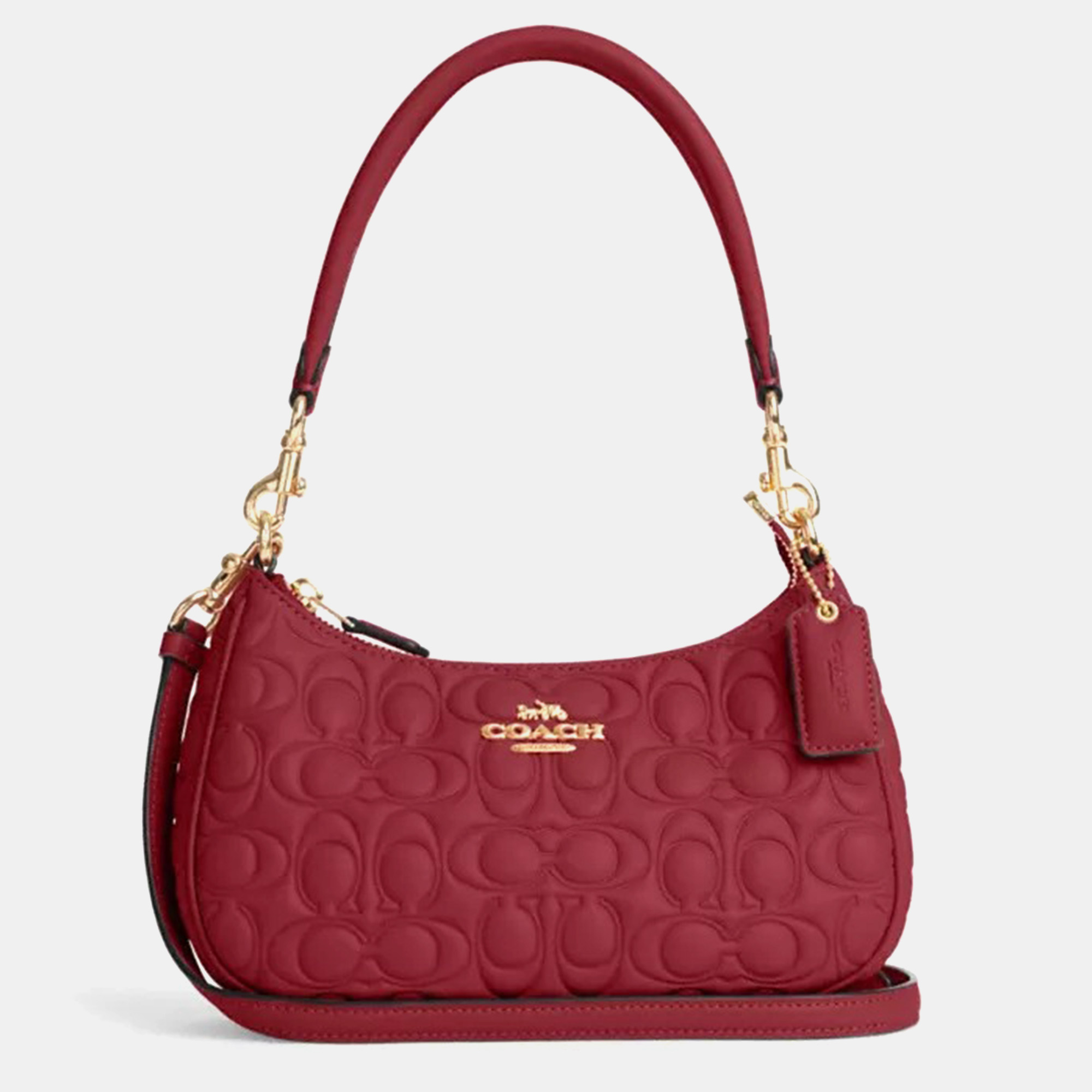
No finish is more directly linked with vintage Coach than glovetanned leather. The idea, attributed to Miles Cahn, was to echo the way a worn baseball glove turns soft and supple. By Coach’s own dating, the finish originates in the 1950s, placing it in the workshop years before the Coach name came into use. The hope was that the leather would soften and improve with use, with the result that a bag would get better, not worse, over years of carrying. In Coach’s product listings, glovetanned leather is offered in current styles, for example the Soho Bag 25, the Juliet Shoulder Bag 25 and the Kisslock Frame Bag. Because the sole basis for detailed claims about the tanning chemistry behind it is third-party speculation, such claims are not included here. In short, the record does support this much: a baseball-glove idea gave early Coach its soft, supple character, and Coach still highlights the finish in its own design stories.
The Early 1960s to 1974: The Years of Bonnie Cashin
Even though Bonnie Cashin was Coach’s first principal designer, she was never an employee or a co-founder. She created about two small collections a year on a contract basis, reportedly by way of a set-up known as the Bonnie Cashin account. Her start date is unsettled, because Coach’s own pages give both 1961 and 1962, so the sources do not agree. Her longest-lasting contribution is the brass turnlock closure, introduced in 1964, which Coach’s copy says was modelled on the toggle on the top of her convertible car. She also earns credit for side pockets, kisslock coin-purse pockets and brighter hues. In 1968, according to Coach’s product copy, she was given a Leather Industries American Handbag Designer Award. Cashin stopped working with Coach in 1974, but her name carries on in recent coach clothing such as the Classic Cashin Coat and in restored Cashin-era bags resold through (Re)Loved.
The Late 1960s and Early 1970s: The Creed Patch and Hangtag
Stitched inside a Coach bag is the creed patch, a leather patch carrying a brief statement about its materials and making. Vintage guides say that creeds first appeared in the late 1960s or early 1970s, and that the earliest carried no serial number. Reportedly, the first versions were set in capital letters, described the bag as natural glove-tanned cowhide and treated scars and wrinkles as natural marks of the leather. According to guides, the earliest pieces read “Made in New York City” and those from the 1970s to the early 1990s read “Made in United States of America”; later creeds gave the country where a bag was handcrafted. The leather hangtag, which Coach says was introduced in 1972, brought a familiar detail to the outside of the bag. Today Coach calls the patch a Storypatch, a stitched-in statement on craftsmanship with a unique registration number, and says every Coach bag carries one. Although Coach presents it as a mark of authenticity, guides caution that counterfeiters copy creeds, so the patch alone cannot prove a vintage coach bag is genuine.
The Horse and Carriage: An Emblem Without a Settled Date
Represented on Coach’s enduring emblem is a coachman perched on a carriage drawn by two horses. This history gives it no date, as its origin date is really unsettled. Coach’s own account sets the emblem’s introduction earlier than the point at which other histories say the Coach name was first used. Those accounts are anything but easy to reconcile, and no primary document deciding the question was found. Whereas logo blogs offer several competing dates, no document supports the popular story that Bonnie Cashin designed the emblem. It is most accurate to treat the emblem as a long-running brand symbol instead of a fixed milestone on a timeline. It should also be distinguished from the Signature “C” monogram, an entirely separate design examined later in this history.
1985 to 2013: New Ownership and the C Monogram
Sara Lee bought Coach in July 1985, in a deal reportedly worth about $30 million. According to Coach, the original Swinger, a short-strap zip-top shoulder bag with a turnlock, came out in 1987. Coach went public in October 2000, after Reed Krakoff reportedly joined as creative lead in 1997. The Signature collection unveiled the “C” monogram in 2001, the same year that Sara Lee reportedly completed its exit. That timing matters, because the pattern many shoppers view as classic Coach dates from 2001 rather than from the mid-century heritage years. The pattern appeared during the early-2000s trend for monograms and was reportedly created under Krakoff. According to Coach, the original Soho Flap appeared in 2006; later, in June 2013, the company announced Stuart Vevers as its new creative lead.
2014 to Today: Heritage as a Design Resource
Still the brand’s Creative Director in 2026, Stuart Vevers reportedly staged his first Coach collection in February 2014. Coach House flagships were opened by Coach in 2016 on Fifth Avenue in New York and at 200–206 Regent Street in London, the second acting as a landmark coach store for coach uk shoppers. The Rogue satchel debuted the same year, was later dropped and reappeared in 2021. On 31 October 2017 Coach, Inc. changed its name to Tapestry, Inc., but only the parent company took a new name. In 2019 the Tabby debuted as a new design based on a 1970s archival shape; the Pillow Tabby followed in 2021, which was also the year the (Re)Loved programme took up restoring and reselling pre-owned bags. The Coach Originals line now reintroduces archive designs as newly made bags, which are not vintage. The first look at the Fall 2026 show reportedly featured the Kisslock Frame Bag in glovetanned leather, nodding to the kisslock clasps of the Cashin era.